why halo
no one should carry it alone.
If today got heavy, who would you tell?
Halo is for people in recovery and people quitting on their own. Most of all, it’s for the ones with no one to tell.
Right now, somewhere,
- someone is six days sober, and the bar is on the way home.
- someone left a meeting an hour ago and isn’t ready to go home.
- someone just realized everyone they used to call, they used to drink with.
- someone wants a drink and doesn’t want to want one.
one hour, and the other 167
one hour together. your circle for the other 167.
Recovery mostly happens in the other 167: the drive home, the kitchen at midnight, the Friday that used to mean a drink. That’s what your Circle on your phone is for.
Halo is building the hour too. Your Circle will meet in person once a week: the same few people, face to face. coming
And if you’re quitting on your own, or your friends were the people you drank with, there may be no meeting to go to. The hour your Circle meets is for you too.
you’re not the only one
it only feels like you’re the only one.
Loneliness and addiction are some of the most common things people go through, and some of the least talked about.
- 1 in 2
US adults report feeling lonely, according to the US Surgeon General.1
- 44.6M
people in the US had a substance use disorder in 2025. Only 11% of them got any treatment.2
- 22.3M
American adults say they’re in recovery, or have recovered, from a drug or alcohol problem.2
These numbers describe the people we’re building Halo for. None of them are about Halo, and none of them promise what Halo will do.
who halo is for
wherever you’re starting from.
-
in the rooms.
You go to meetings. Maybe you have a sponsor. Keep all of it. Halo is for the hours in between, with a small Circle that knows what you’re working on.
in early access -
on your own.
No program, no meetings, maybe just a decision. Sober curious, taking a break, or done for good. Find people who get it, without standing up in a room to say so.
in early access
People who go to meetings and people quitting on their own sit in the same Circle. You don’t have to pick a box, and if a loss is part of your story, you can bring that too.
our mission
Halo exists so that no one has to get sober or stay sober without someone to talk to.
We bring people who understand into small, anonymous-first Circles: on your phone whenever you’re ready, and soon, together in person once a week.
human first. never alone.
what we’re building
built for the hours in between.
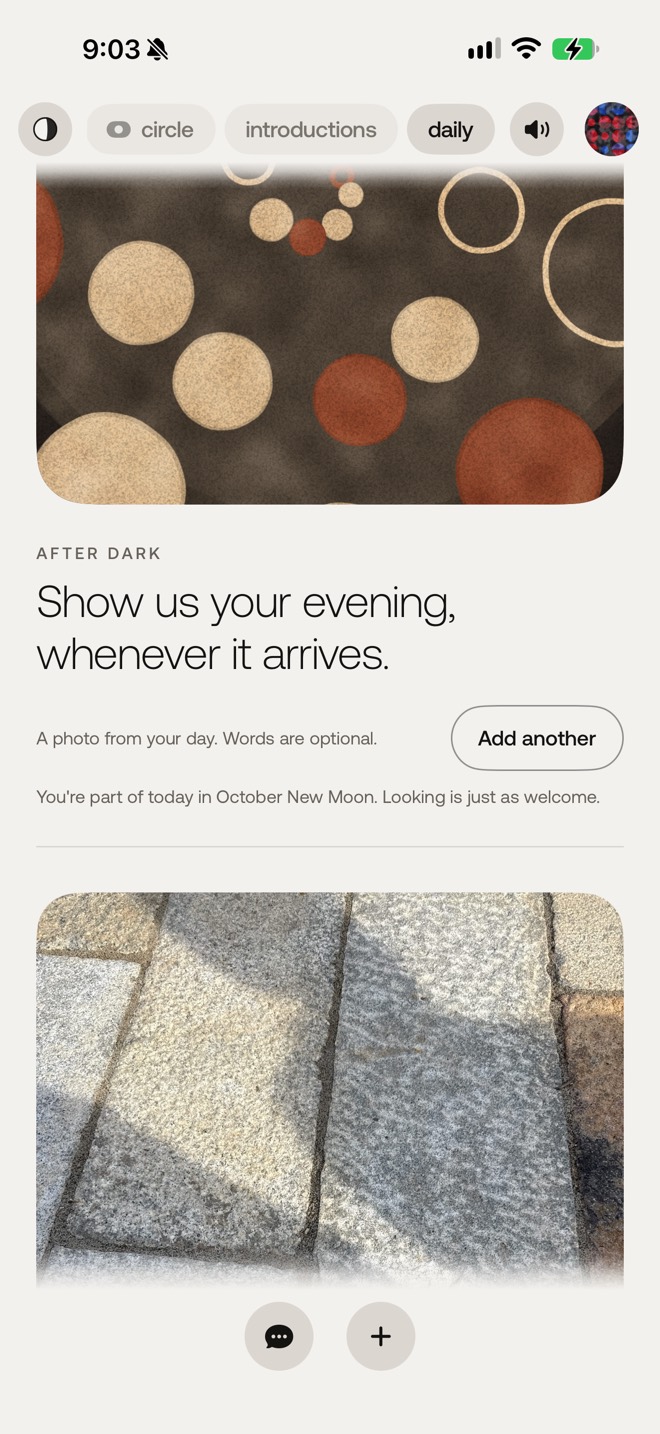
small circles. in the app
A few people who keep coming back to each other. Not a feed, and not a room full of strangers.
anonymous by default. in the app
You show up as a handle and a pattern you choose, not your name. Share more only if you want to.
whenever you’re ready. in the app
Post at 2am and your Circle sees it when they wake up. Or read along for a while first. Looking is just as welcome.
nothing to lose. in the app
Milestones are claimed and kept. A hard day doesn’t take anything away from you, and nobody is keeping score.
people, not a chatbot. in the app
There’s no AI companion in Halo. The support comes from people who’ve been where you are.
meeting in person
your circle, in person.
coming: Northern Virginia firstOnce a week, your Circle will meet in person for an hour. The same few people, at a regular time, face to face. Your phone carries the week in between.
The first in-person Circles start in Northern Virginia in early 2027. Leave your email below and we’ll tell you when there’s one near you.
the bracelet
given in person. tap to open.
tap to open: comingHalo bracelets will be given in person. Tap yours to your phone and your Circle opens.
what halo isn’t
an addition, not a replacement.
Halo is peer support. It isn’t treatment, therapy or a crisis service, and it doesn’t replace your meetings, your sponsor, a counselor or a doctor.
If something already helps you, keep it. Halo is for the hours around it.
whenever you’re ready.
Sober Start opens first. In-person Circles start in Northern Virginia in early 2027. Find your Circle on the website, or see every way to get Halo.
sources.
- Office of the U.S. Surgeon General. Our Epidemic of Loneliness and Isolation: The U.S. Surgeon General’s Advisory on the Healing Effects of Social Connection and Community. U.S. Department of Health and Human Services; 2023. “Approximately half of U.S. adults report experiencing loneliness” (p. 9). hhs.gov
- Substance Abuse and Mental Health Services Administration. Key Substance Use and Mental Health Indicators in the United States: Results from the 2025 National Survey on Drug Use and Health. HHS Publication No. PEP26-07-010; 2026. Substance use disorder and treatment figures are for people aged 12 or older; recovery figures are for adults who perceived they ever had a drug or alcohol problem (73.0% of 30.6 million). samhsa.gov
Sources checked 15 November 2026. These figures describe the people and problems studied, not Halo. Halo offers peer support, not treatment or crisis care.